
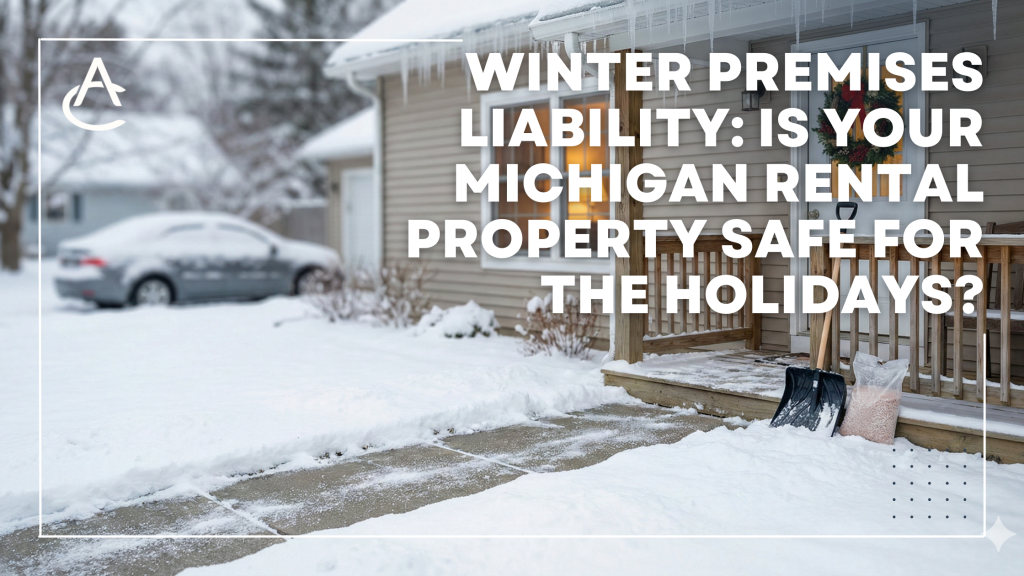
Happy Holidays from The Law Offices of Aaron D. Cox!
While many of us are enjoying time with family or navigating the roads to get to holiday gatherings, for landlords and property managers, the work never truly stops. In our last few posts, we discussed staying safe on the roads; today, we are bringing the focus back to where it matters most for our clients: your property.
The holiday season brings a “perfect storm” for premises liability issues: increased foot traffic from guests and delivery drivers, combined with Michigan’s unpredictable freeze-thaw cycles.
If you own rental property in Detroit or the surrounding areas, here is what you need to know about protecting yourself from liability this winter.
1. The “Open and Obvious” Danger is No Longer a Guaranteed Defense
For years, Michigan property owners relied heavily on the “Open and Obvious” doctrine—the idea that if a hazard (like a patch of ice) was plainly visible, the landlord wasn’t liable if someone slipped on it.
However, recent shifts in Michigan case law have made this defense much more difficult to use. The courts are placing a higher burden on landlords to anticipate harm, even if the danger is obvious.
- The Takeaway: You cannot assume that because it is snowing, people should “know better.” As a landlord, you have a statutory duty to keep the premises and common areas in reasonable repair and fit for their intended use.
2. Managing the “Holiday Guest” Surge
Liability doesn’t just apply to your tenants; it extends to their invited guests. Today and throughout the New Year, your properties may see:
- Elderly relatives visiting family.
- Food and package delivery drivers rushing to doors.
- Guests unfamiliar with the layout of your walkways.
If a tenant’s guest slips on an icy patch that you were responsible for clearing, you could be facing a premises liability lawsuit.
Action Item: Ensure your snow removal contracts are airtight. If you hire a third-party plow service, verify that their trigger depth (e.g., 2 inches) is sufficient and that they are applying salt to walkways, not just plowing the driveway.
3. Vacant Units: The Silent Risk
If your tenants are traveling for the holidays, or if you have units currently on the market, the risk of frozen pipes increases dramatically during cold snaps. A burst pipe doesn’t just damage your asset; it can damage neighboring units and destroy a tenant’s personal property, leading to complex disputes.
Action Item:
- Ensure lease agreements require tenants to maintain a minimum temperature (usually 55°F–60°F) even when they are away.
- Inspect vacant units regularly during the holidays to ensure the heat is working.
The Bottom Line
The best way to win a lawsuit is to prevent it from happening. By being proactive with snow removal and maintenance this week, you protect your tenants and your business.
As we head into 2026, it is also the perfect time to review your lease agreements. Do your leases clearly define who is responsible for snow removal—the landlord or the tenant? Ambiguity in your lease is a liability waiting to happen.
Need a Lease Review for the New Year? At The Law Offices of Aaron D. Cox, PLLC, we specialize in protecting the interests of Michigan landlords. If you are concerned about your current lease language or facing a liability claim, contact us today.